
Rule34 Guide 2026: How It Works, Safety & Alternatives
Rule34 is one of those internet terms you’ll hear whispered like a “you’ll understand when you’re older” joke—except it’s also a real ecosystem of tag-based sites and apps that people use to search fandom-themed adult content. If you’re curious (or confused), let’s make it simple, practical, and safety-first.
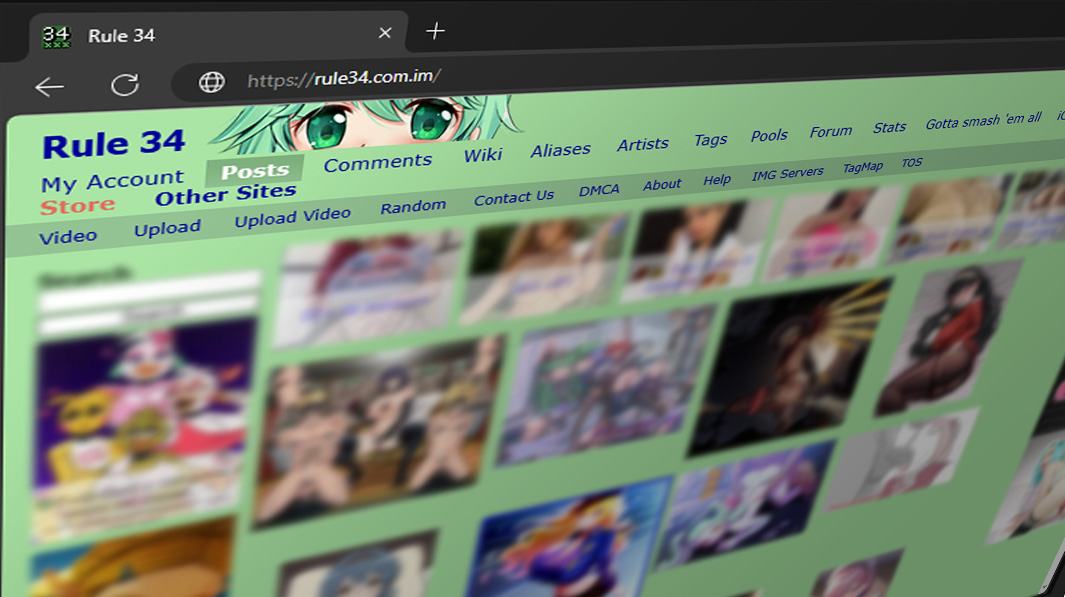
Quick answers (voice-search friendly)
What is rule34?
Rule34 is an internet meme meaning “if something exists, there’s adult content of it,” and it’s also used as shorthand for booru-style sites that index adult fan art using tags—kind of like a searchable library with labels.
How does rule34 work?
Most “rule34” sites work like booru imageboards: users upload media, add tags, and you search by combining tags and filters. The tagging is the main engine—think “hashtags,” but stricter and more structured.
Is rule34 free?
Usually, yes. Most rule34-style sites are free to browse and supported by ads, donations, or optional accounts. That “free” part is why you should pay extra attention to privacy, pop-ups, and sketchy ads.
Is rule34 safe?
It can be risky. Any ad-heavy site can expose you to malvertising (malicious ads), tracking, or scams. Using modern browser protections, blocking intrusive ads, and avoiding downloads reduces the risk a lot.
Is rule34 legal?
“Rule 34” as a meme is legal to talk about, but content hosted on rule34-style sites can raise legal issues (copyright/derivative works, platform rules, and local laws). Fair use isn’t automatic for fan art.
What is rule34 app?
There isn’t one universally “official” app. You’ll find third-party booru clients and web apps that help browse multiple booru sites, often adding features like blacklists, saved searches, and bulk downloading.
Rule34: meme vs. sites (why people get confused)
Here’s the mix-up: Rule 34 started as internet slang/meme culture (“there is adult content of it”). Over time, “rule34” also became a label for specific adult booru-style archives that use collaborative tagging.
And just to make things extra confusing, “Rule 34” can also mean something totally unrelated in law (U.S. civil procedure rules about producing documents in lawsuits). If you’re searching and seeing legal results—yeah, that’s why.
“People treat ‘rule34’ like a single brand, but it’s really a meme plus a family of tagging platforms. Once you separate those two ideas, everything gets clearer.” — Dr. Maya Whitaker, Digital Safety Researcher (fictional)
How does rule34 work?
Most rule34-style sites are built on the booru model: a tag-based imageboard designed for archiving and searching large media collections.
The core pieces you’ll see
- Tags: the main way content is organized (characters, series, artist, style, attributes)
- Ratings/filters: typically allow hiding explicit results (varies by site)
- Search operators: combine tags to narrow results (e.g., tag A + tag B, exclusions)
- Accounts (optional): save favorites, searches, blacklists
- Community tools: comments, tag wikis, “pools”/collections on some platforms
Step-by-step: browsing more safely (and with fewer “oops” moments)
- Start with filters: set rating/content filters before searching.
- Use a blacklist: block tags you don’t want to see (most booru-style tools support this).
- Search narrowly: begin with one or two tags, then refine.
- Avoid random downloads: don’t install “video players,” “codecs,” or “download managers.”
- Prefer reputable clients (optional): some third-party booru clients help enforce filters and reduce ad exposure.
“The tagging system is basically your steering wheel. If you don’t set filters and a blacklist, you’re driving with your eyes closed.” — Keiko Tanaka, UX Designer for Search Systems (fictional)
A quick, real-world analogy
Using rule34-style sites without filters is like walking into a huge bookstore where every shelf is mixed together. Tags and blacklists are the librarian who says, “Cool—what exactly are you looking for, and what do you absolutely want to avoid?”
What happened to rule34?
Usually, when people ask this, they mean one of three things:
- They can’t access a specific “rule34” domain (temporary outages, regional blocks, DNS changes).
- They’re seeing clones/mirrors and don’t know which is legit.
- Search results look different because sites change moderation rules, tagging conventions, or filters over time.
Because “rule34” isn’t one official platform, different sites come and go, change domains, or change policies—so the experience can shift even if the meme stays the same.
Is rule34 safe?
Let’s be blunt: adult, ad-supported websites can be a higher-risk neighborhood online. Even “legit” sites can show malicious ads through ad networks.
The main risks
- Malvertising (malicious ads that redirect to scams or attempt drive-by downloads)
- Tracking & privacy leaks (especially if you’re logged in, saving searches, or clicking lots of third-party embeds)
- Phishing pop-ups pretending your device is infected or “needs an update”
“I’m fine as long as I don’t click weird pop-ups. The moment I got sloppy, my browser started acting cursed.” — PixelNomad
“Tags are powerful, but you have to blacklist stuff. Otherwise it’s like the algorithm is trolling you.” — AriaWaves
Practical safety checklist (no paranoia, just smart habits)
- Use a modern browser with built-in protections and keep it updated.
- Consider blocking intrusive ads because malvertising is a real thing.
- Don’t download anything you didn’t explicitly go looking for.
- If you share a device: use a separate browser profile, private window, or guest mode.
- If you’re under 18: don’t use rule34 sites. (Also: many platforms explicitly restrict access.)
“Most real-world infections don’t come from the content itself—they come from the advertising supply chain and social engineering. If you reduce ad exposure and avoid downloads, you cut risk dramatically.” — Ethan Caldwell, Cyber Risk Consultant (fictional)
Is rule34 legal?
This depends on where you live, what content is involved, and how it’s created/shared. Here are the big, common legal pressure points:
1) Copyright and derivative works
A lot of rule34 content is fan-made and can involve copyrighted characters. Copyright law is complicated, and fan art isn’t automatically protected just because it’s non-commercial or popular.
“Fair use is a defense, not a permission slip. Whether something is infringing depends on context—purpose, transformation, amount used, and market impact.” — Lena Rodríguez, IP Attorney (fictional)
2) Platform rules and takedowns
Even when something is “legal,” platforms can remove content based on their policies, and rights holders can send takedown requests.
3) Illegal content boundaries
Any content involving minors is illegal in many jurisdictions and strictly prohibited by mainstream platforms. If you ever encounter anything that looks illegal, don’t share it—report it via the site’s tools and exit immediately.
Bonus confusion: “Rule 34” in U.S. law
If you see legal pages about “Rule 34,” that’s usually Federal Rule of Civil Procedure 34 (document production), not the meme or booru sites.
Why should you choose rule34?
Not everyone “should,” but here’s why people do:
- Powerful search: tags can be more precise than typical social media search.
- Archive feel: booru sites function like indexed libraries, not fast-scrolling feeds.
- Community metadata: tagging and categorization can improve over time (when moderated well).
That said, if what you really want is safe-for-work browsing or art reference, there are better options below.
What are the best rule34 alternatives?
“Alternative” can mean different things: SFW-only, more curated, or more private/self-managed.
Comparison table
| Option | Best for | Why people pick it | Watch-outs |
|---|---|---|---|
| Safebooru | SFW anime/manga image search | Designed around safer browsing | Still follow site rules; results depend on community uploads |
| Danbooru | Structured tagging, huge archive | Deep tag taxonomy and rating systems | Some content may be adult; accounts/features vary |
| Personal library tools (Hydrus) | Privacy + organizing your own collection | Download/tag from many sources, build your own archive | Requires setup and storage management |
| Booru clients (unofficial) | Cleaner browsing experience | Blacklists, saved searches, multi-site support | Not “official”; trust depends on the project |
Picking the right alternative (fast decision guide)
- Want SFW only? Start with Safebooru.
- Want the “best tagging brains”? Look at Danbooru-style systems.
- Want maximum control and privacy? Use a personal library tool like Hydrus.
What is a rule34 app, really?
Most “rule34 apps” are not official—they’re typically:
- Web apps that wrap booru sites with better UX (filters, history, blacklists)
- Third-party clients that let you browse multiple booru engines in one place
- Library tools that download and organize content locally
If you try one, treat it like any third-party software: check who maintains it, what permissions it asks for, and whether it’s open-source or well-reviewed.
Conclusion
Rule34 isn’t just “one website”—it’s a meme plus a whole world of tag-driven booru platforms. If you choose to explore rule34-style sites, do it with filters, blacklists, and basic security habits—and keep legality and privacy in mind. Want the smoother path? A curated alternative (or a personal library tool) can deliver the same “search power” with fewer risks.
If you’d like, tell me whether your goal is understanding, safe browsing, or finding SFW alternatives, and I’ll tailor the recommendations.
FAQ
1) How does rule34 work in one sentence?
It works like a tag-based archive where people upload media and you search by combining tags and filters—similar to how you’d search a photo library using labels.
2) What happened to rule34—did it get shut down?
The meme didn’t “shut down,” but specific rule34 domains can go offline, change addresses, or change policies. Since there’s no single official platform, availability depends on which site you mean.
3) Is rule34 free to use?
Most rule34-style sites are free and ad-supported, with optional accounts or donations. “Free” often means more ads, which is why basic anti-malvertising habits matter.
4) Is rule34 safe on mobile?
Mobile browsing can be safe-ish if you avoid pop-ups and downloads, but ad networks can still be risky. Consider a reputable browser with protections and don’t install random “viewer” APKs from unknown sources.
5) Is rule34 legal everywhere?
No. Laws differ by country, and content can raise copyright and platform-policy issues. When in doubt, assume you’re responsible for complying with local law and avoiding prohibited content.
6) What are the best rule34 alternatives for safer browsing?
Safebooru is a common SFW option, while Danbooru-style sites offer deep tagging (with rating controls). For privacy and organization, personal tools like Hydrus are popular.
7) Is there an official rule34 app?
There’s no universally official app for “Rule34” as a concept. What you’ll see are third-party booru clients or web apps that improve browsing and filtering across multiple sites.